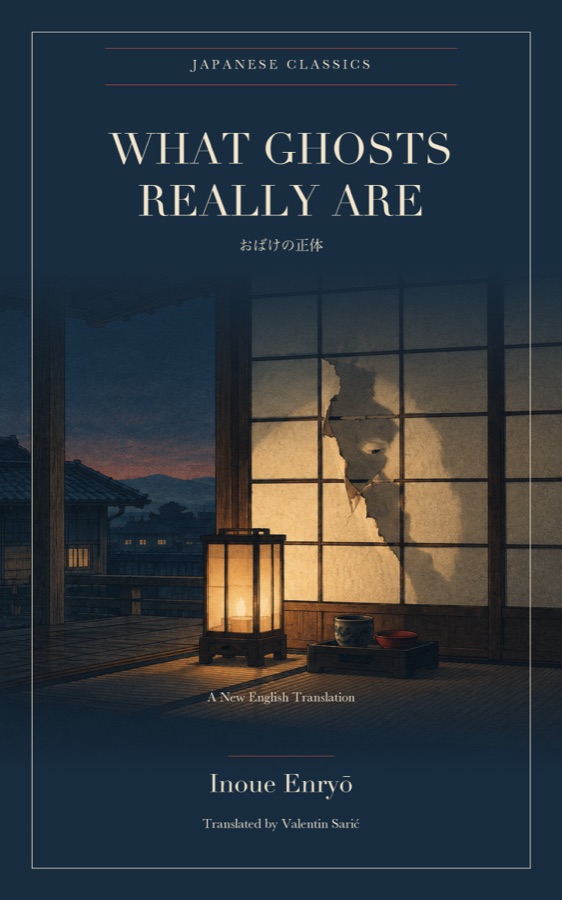
What Ghosts Really Are
A face appears in a paper screen. Stones fall where no hand can be seen. Strange fires shine over the sea, and household animals seem to speak. In What Ghosts Really Are, philosopher Inoue Enryō asks what lies behind these unsettling reports, collecting testimony, exposing tricks, and following the everyday causes of extraordinary fears.
Across 130 numbered discussions, he examines haunted houses, fox possession, dreams, divination, optical illusions, spiritualism, and the influence of expectation. His investigations open a window onto the beliefs and anxieties of early twentieth-century Japan, while his closing essay asks how explainable mysteries differ from the deeper questions that knowledge cannot settle.
Enryō’s confidence in reason sits alongside the medical assumptions, social judgments, and religious arguments of his period. This complete English translation preserves that distinctive mixture, with notes on Japanese terms, uncertain readings, and the source’s contradictions. It offers both a varied collection of uncanny incidents and a substantial historical argument about superstition, inquiry, and belief.