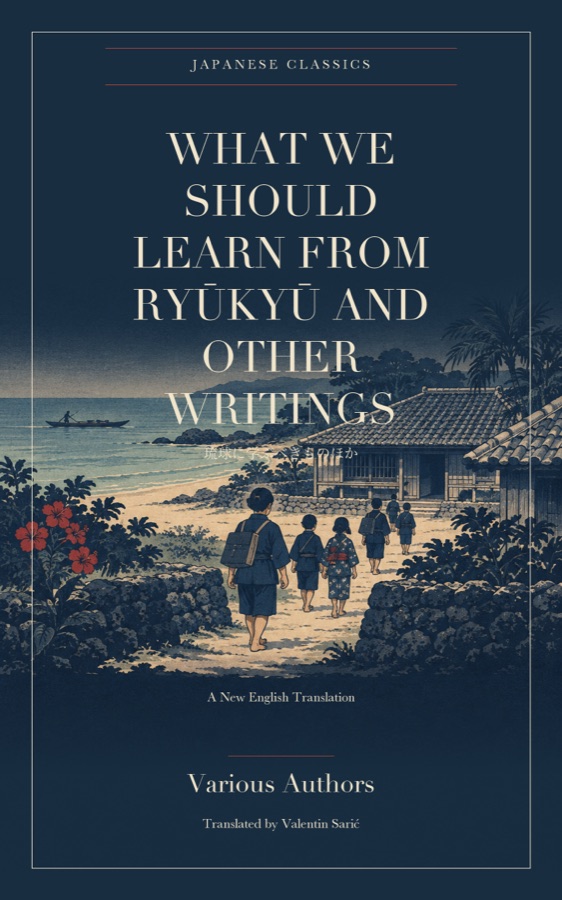
What We Should Learn from Ryūkyū and Other Writings
What can mainland Japan learn from an isolated island where children go barefoot, teachers have no tea to offer, and school attendance surpasses that of Tokyo and Osaka? Shiga Shigetaka finds lessons in Ryūkyū’s schools, fishing villages, women’s savings, and welcoming gatherings. His historical account brings education and everyday work into the same field of view.
These ten writings also follow Hamada Seiryō through Egypt and the hot springs of Europe and East Asia, examine the 1914 Sakurajima eruption through Ishikawa Seishō’s detailed report, and present Tsuda Sen’s experiments in assisting cereal pollination. Their tables, measurements, and period judgments remain visible.
Honda Seiroku introduces a botanical encyclopedia; Yamamoto Senji turns a newspaper’s monkey parable into a political speech; Okazaki Sessei recalls two unsettling experiences; and Oyanagi Shigeta introduces the arguments of Han Feizi. All supplied writings appear in full, with separate author credits and reader notes explaining historical units, textual anomalies, and the limits of introductory works. AI-assisted translation, prepared and edited by Valentin Sarić.