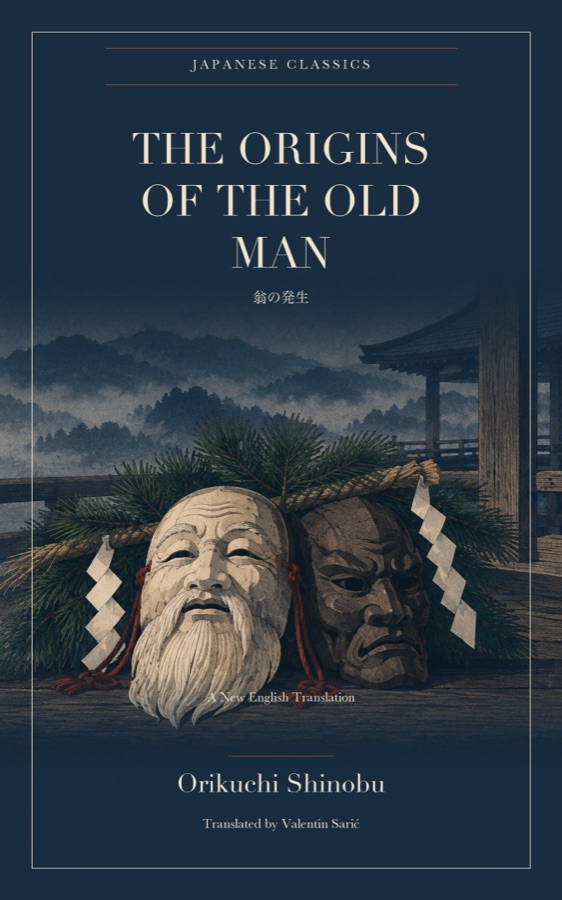
The Origins of the Old Man
The Old Man of Japanese performance is more than an elderly figure. For Orikuchi Shinobu, he carries memories of visitors from beyond the sea, mountain ritual specialists, ancestral blessings, and ceremonies that renew the life of a household or village. This essay follows that figure through sacred masks, dance, narration, and the comic or interpreting counterpart called modoki.
Drawing on visits to Okinawa and mountain festivals, Orikuchi connects island processions with Noh, dengaku, winter rites, pine celebrations, and the changing relations between deities and human performers. His argument moves from the gifts brought from mountains to the meaning of white and black masks, always testing how an art might preserve traces of an older ritual world.
First published in 1928, this complete English translation includes all nineteen sections, quoted poems, and acknowledgments of fellow scholars. Thirty-eight notes explain local terms, historical institutions, uncertain readings, and conjectural etymologies. An influential voice in Japanese folklore and literary scholarship, Orikuchi offers a searching, imaginative account whose unresolved questions remain central to its appeal.