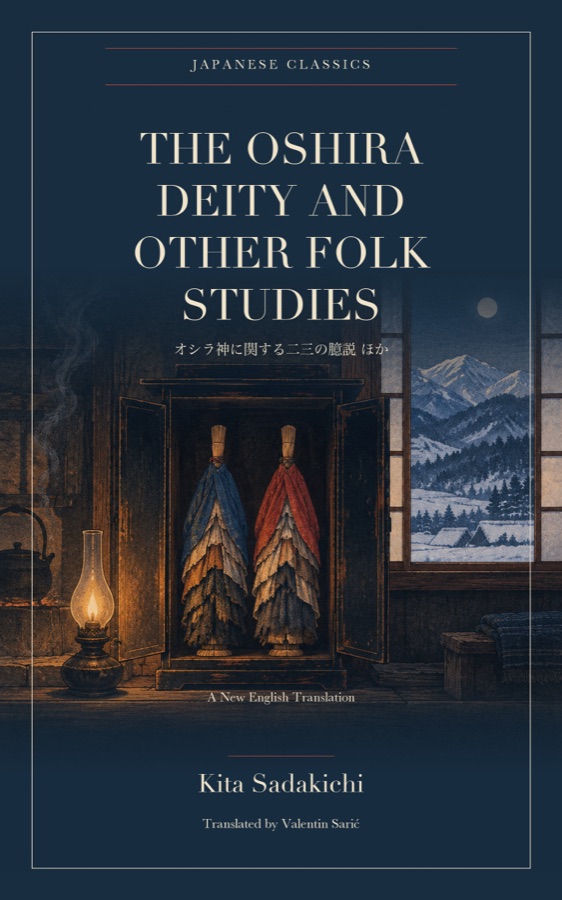
The Oshira Deity and Other Folk Studies
Why do two dressed bamboo figures in a northeastern farmhouse share a name with a Hina doll? Who were the long-armed and long-legged gods of Japanese shrines? And what lay behind the belief in families that could possess their neighbors?
Kita Sadakichi (1871-1939) was one of the most inventive historians of his generation, and in these essays of 1919-1928 he reads village cults, shrine names and old stigmas as traces of lost peoples. The book also covers human sacrifice and the human pillar, the Gonbodane of Hida, the Tsuchigumo, and a witty exchange about the Demon Hag of Adachigahara.
Each essay is translated complete from the Japanese, with a translator's note, endnotes, and source information. Kita's period terms for marginal groups are retained as historical terminology and explained.