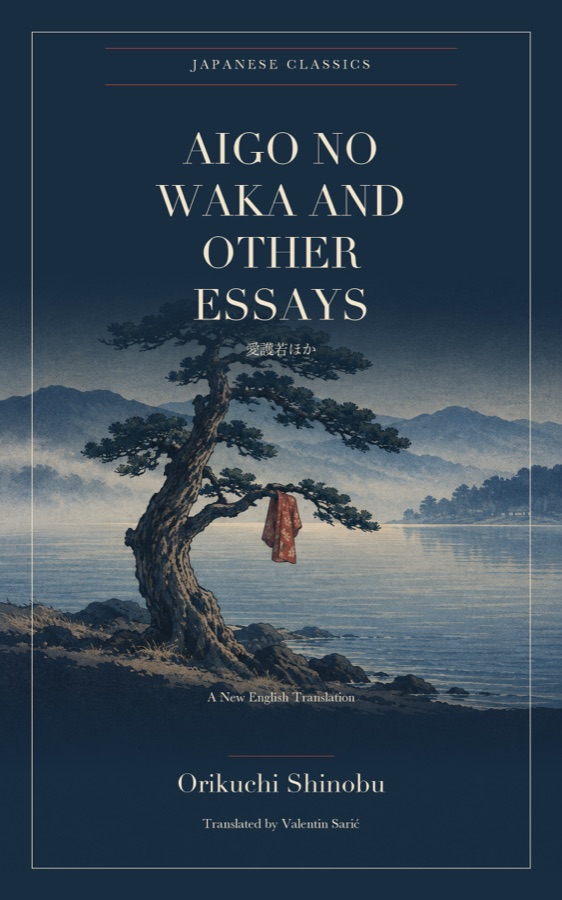
Aigo no Waka and Other Essays
Aigo no Waka’s suffering passes from legend into religious storytelling, theater, and fiction. Orikuchi Shinobu retells the narrative in detail, then asks how its curses, sacred pine, wandering hero, and transformed spirits became entangled with temple histories and later dramatic inventions. His comparisons preserve uncertainties as well as striking connections.
These six complete works, first published between 1918 and 1929, also include a plea to preserve an actor’s older Edo art and a searching review of folk dance and song brought to Tokyo. In a personal essay, Orikuchi traces his surname through family memories, vanished streets, and extensive lists of place-names.
The final two works turn to language: the influence of teachers, the power to create words, and regional expressions whose histories remain difficult to establish. A poet and scholar of folklore, Orikuchi treats performance and speech as living materials continually changed by their users.