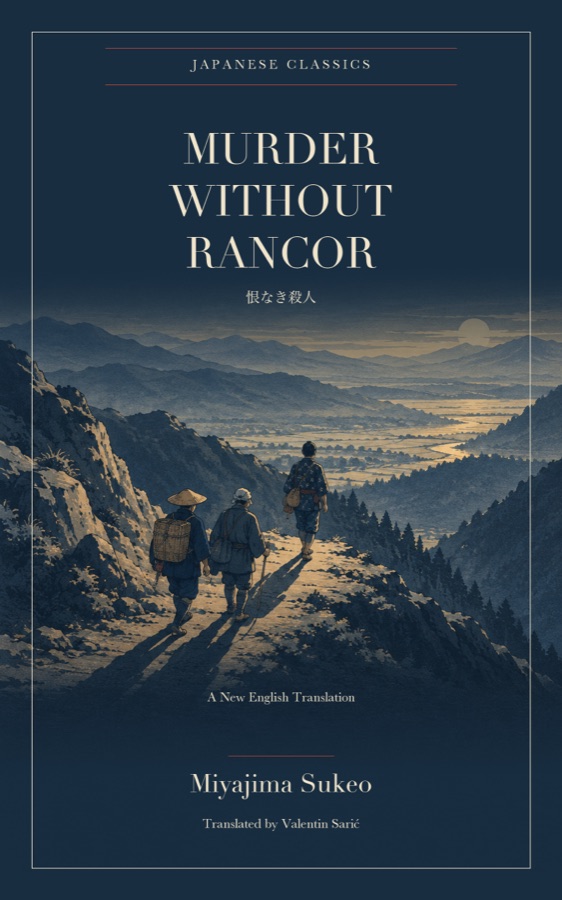
Murder Without Rancor
A letter from the mine owner turns Ikeda’s ordinary resentment into a crisis. Accused of neglecting his duties, the young clerk longs to escape the humiliations of salaried work, but every possible freedom seems to promise hunger or another kind of confinement. His companions offer friendship, rough advice, and dreams of life beyond the rules.
Then a man is killed at a festival in a neighboring village. Rivalries between mines, workers’ obligations to one another, and the arrival of the police draw Ikeda into a tragedy he cannot settle by finding someone to blame. A quiet young miner’s account of the killing challenges his ideas about courage, cowardice, and responsibility.
First published in September 1917, Miyajima Sukeo’s story portrays a mining community through heat, darkness, drinking, labor, and fragile solidarity. This complete English translation includes all seven sections and twenty-nine notes explaining mining language, historical references, and uncertain readings. Its sharp social criticism is inseparable from the troubled inner life of a man who can neither leave nor remain at peace.