Museums
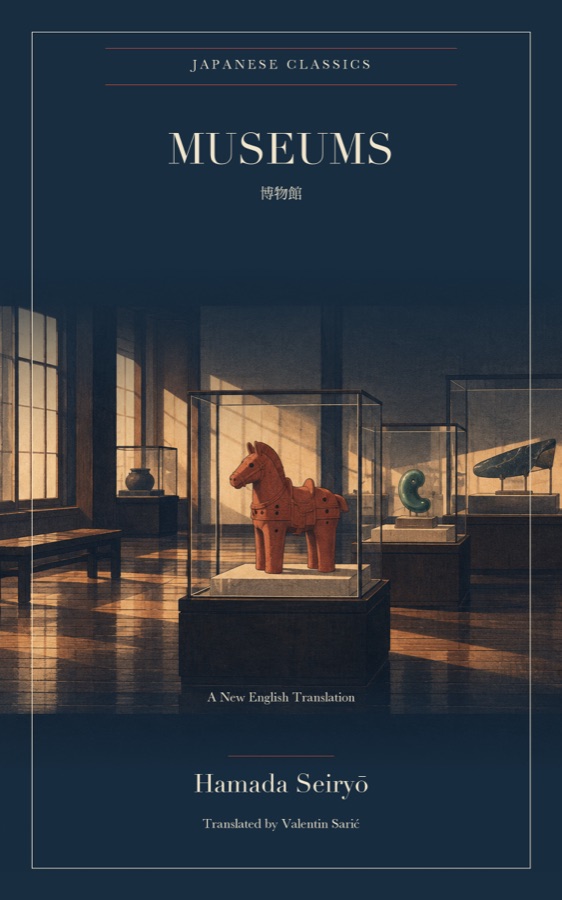
What can a stone arrowhead, a clay horse, or a gold crown tell us about the people who made it? In Museums, Hamada Seiryō guides young readers through an imaginary collection, explaining how everyday objects become evidence for the distant past.
The journey begins with museums in Europe and America, then enters galleries of prehistoric tools, cave paintings, pottery, and great stone monuments. Japanese shell mounds and burial grounds lead to curved jewels, bronze bells, armor, horse trappings, and the clay figures called haniwa. The final rooms explore ancient tombs in Korea and Manchuria, including the dazzling treasures of Gyeongju.
An archaeologist writing in the late 1920s, Hamada combines personal recollections, practical observations, and an inviting teacher’s voice. His account also preserves the scientific assumptions and colonial perspectives of its period. This complete new English translation retains the original captions and provides concise explanatory notes, offering both an introduction to archaeological thinking and a historical portrait of how the past was taught.