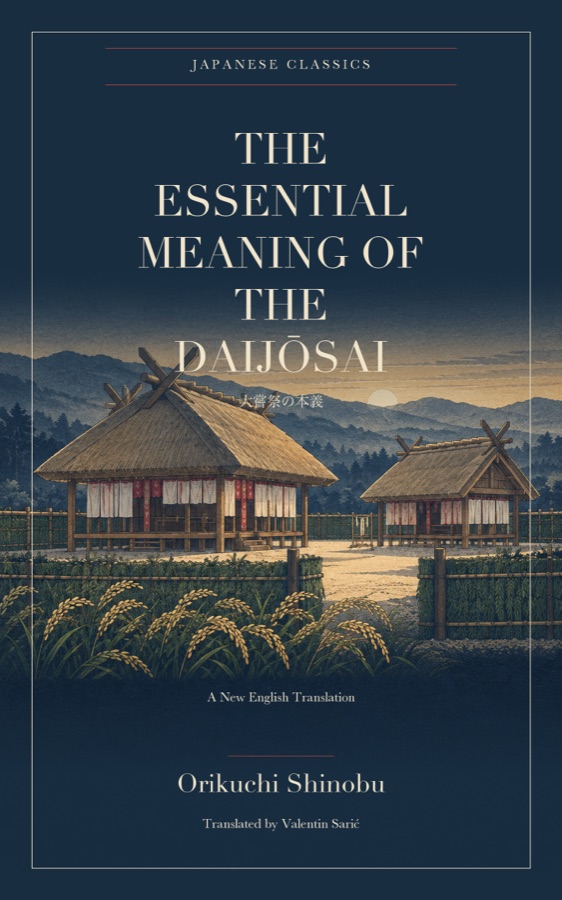
The Essential Meaning of the Daijōsai
What gives an emperor his ritual authority? Orikuchi Shinobu approaches the Daijōsai, the great imperial first-fruits observance associated with accession, through the worlds of folklore and ancient belief. Rice offerings, visiting gods, and auspicious words become parts of an account of souls arriving, attaching themselves to bodies, and renewing human power.
The discussion ranges across court proclamations, hereditary ritual offices, purification baths, sacred garments, provincial songs, dancers, and the banquet that releases participants from abstinence. Village customs and ancient poems illuminate the relationships Orikuchi proposes between divine hospitality and imperial ceremony.
This complete English translation preserves all fifteen numbered sections and the physical lines of quoted poems. Notes explain specialized offices, recovered Japanese readings, mythic references, uncertain etymologies, and discrepancies retained from the source. First publication is unspecified in the supplied metadata; the parent collection appeared in 1930. AI-assisted translation.