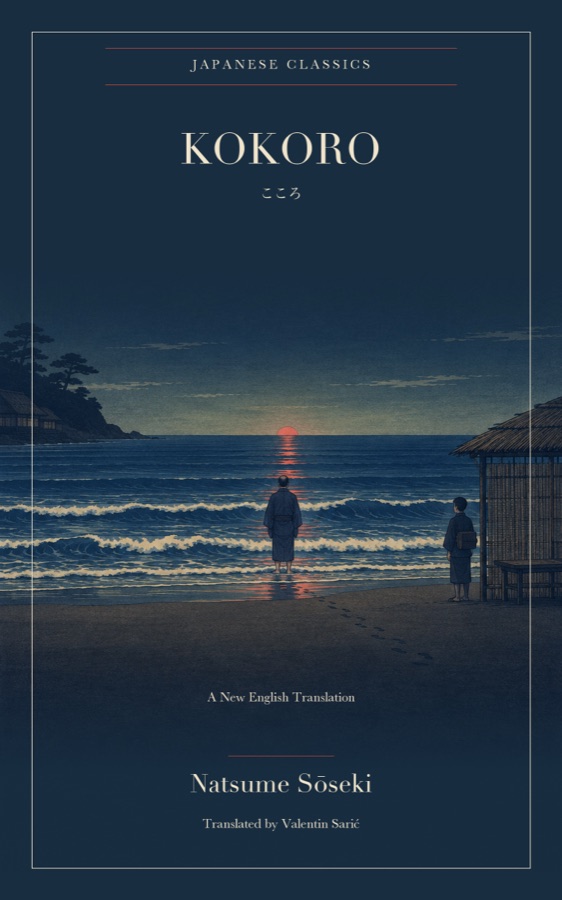
Kokoro
A student on a summer holiday at Kamakura notices a quiet man among the bathers on the crowded beach, and cannot stop thinking about him. He never learns to call the man anything but “Sensei.” Back in Tokyo he becomes a regular visitor to Sensei’s small house, where a gracious wife, a monthly visit to a grave, and a habit of courteous evasion hint at something Sensei will not say. The young man presses; Sensei deflects. The more the student wants to know, the lonelier Sensei seems.
Then news from home calls the student back to the country, to his gravely ill father and an anxious family, as the Meiji era draws toward its close. And at last a long letter arrives, in which Sensei sets down what he has never told anyone.
Kokoro (1914) is one of the last novels Natsume Sōseki completed, first published as a newspaper serial in the Asahi Shimbun from 20 April to 11 August 1914. It is a quiet, unhurried book about friendship, trust, loneliness and the distance between what people feel and what they can say, and it has been read in Japan for more than a century. The title is a word for “heart” in its widest sense: mind, feeling, the thing at the center of a person.